

01 Blog · 19 Feb 2024
Cloud Security Best Practices: How Companies Protect Their Data
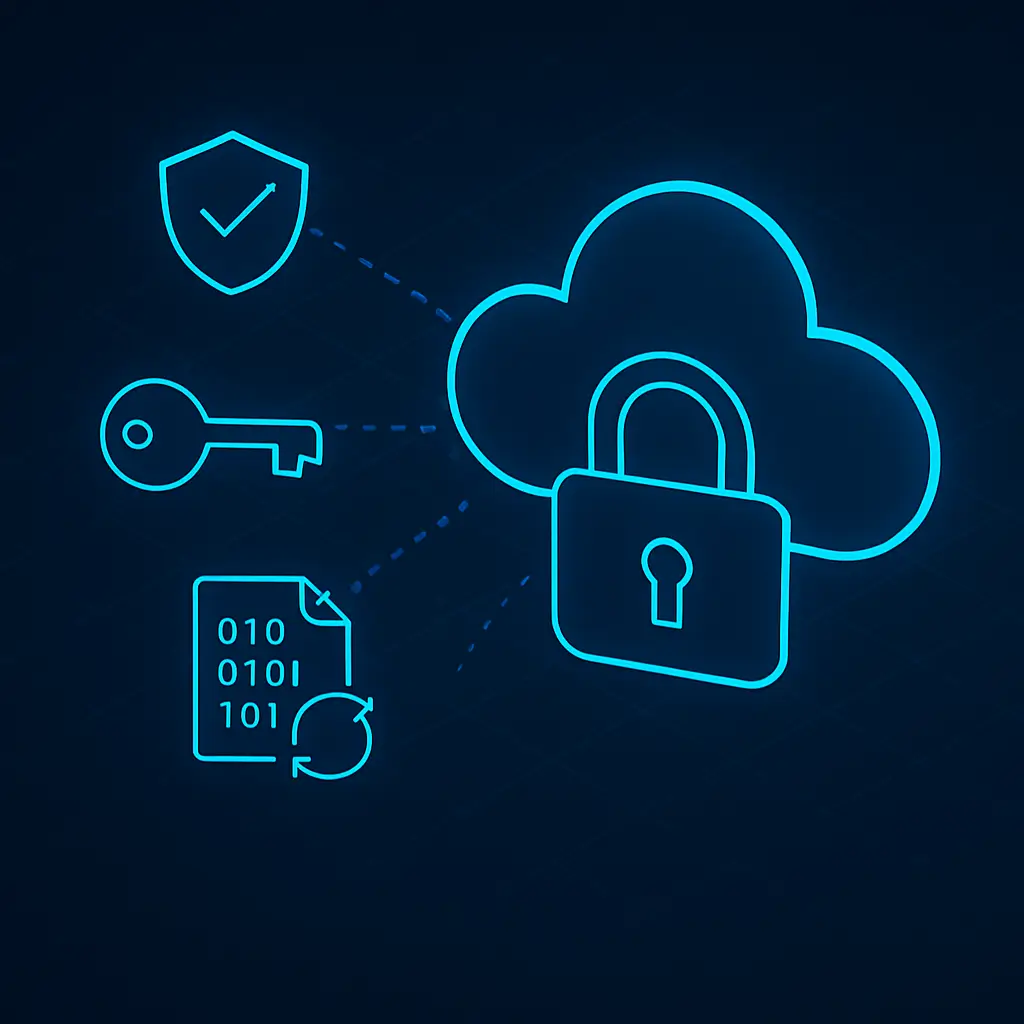
In a world where businesses increasingly rely on cloud services, security in the cloud has become a central concern. Implementing cloud security best practices is crucial to protect data and applications. In this article, we will highlight the key strategies and measures that companies can take to secure their cloud environments.
Understanding Responsibility
One of the first steps to ensuring security in the cloud is understanding the shared responsibility model. This model divides responsibility for security between the cloud provider and the customer. While the provider is responsible for the security of the cloud infrastructure, it is up to the customer to ensure security in the cloud. This includes securing data, applications, and access controls.
Implementing Strong Access Controls
Implementing strong access controls is crucial to ensuring that only authorized users have access to your cloud resources. This includes using multi-factor authentication (MFA) for all users, especially those with administrative rights. Additionally, companies should apply the principle of least privilege, where users are granted only the minimum permissions they need to perform their work.
Data Encryption
Data encryption is another important security measure. Both data transmitted over the internet and data stored in the cloud should be encrypted. Many cloud providers offer encryption services that allow data to be encrypted both at rest and in transit. Companies should leverage these features and additionally manage their own encryption keys to achieve a higher level of security.
Regular Security Assessments
To proactively identify and address security vulnerabilities, companies should conduct regular security assessments of their cloud environments. This includes reviewing configurations, conducting penetration tests, and assessing compliance with security standards. Such assessments help identify potential weaknesses before they can be exploited by attackers.
Security Awareness and Training
An essential aspect of cloud security is employee awareness and training. Many security breaches are due to human error, such as clicking on phishing links or using weak passwords. Companies should conduct regular training to educate employees about the latest security threats and train them on best practices for handling cloud services.
Backup and Disaster Recovery
Despite all security measures, incidents cannot be completely ruled out. Therefore, it is important to have effective backup and disaster recovery plans in place. Companies should ensure that regular backups of their data are performed and that these backups are stored in a secure environment. In the event of a security incident or data loss, these backups enable quick data recovery.
Conclusion
Cloud security is a continuous challenge that requires a proactive and comprehensive approach. By implementing the above best practices, companies can effectively secure their cloud environments and minimize the risk of security breaches. It is important to recognize that cloud security is not just a technical task but also an organizational one that requires the commitment of all employees.
02 More on this topic
Go deeper
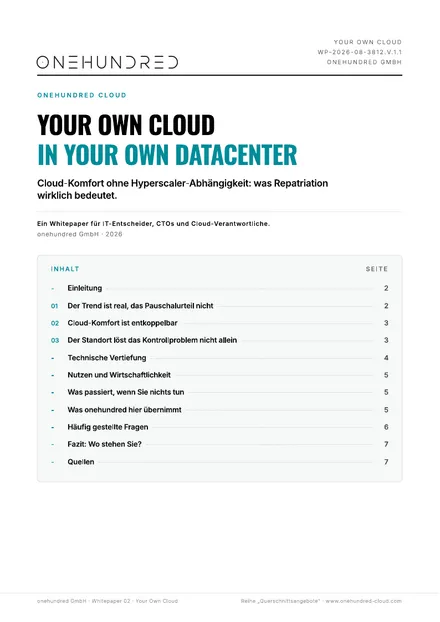
Free whitepaper · 7 pages
Your Own Cloud in Your Own Datacenter
By Andreas Hankel, CTO onehundred. Download in exchange for your e-mail address, no sales call.
03 Fasttrack analysis

Talk to us instead of reading alone
Fifteen minutes with Nils Hornke, Senior Executive Advisor, clarify more than an hour of research: where you stand today and which next step pays off.
 Book a call
15 minutes · not a sales call · book directly in the calendar